Foreign Currency or Local Currency Which is one is Better in Africa?
One question worth answering before you pack your bags is whether to carry US dollars, exchange money into local currency, or rely on your bank card.
The answer depends on where you are going, how you plan to spend your money and the types of services you will use.
US dollars can be useful for certain hotel bookings, safari packages and tourism services. However, local currency is usually more practical for everyday purchases such as meals, shopping, local transport and small expenses.
There is another important consideration: paying in US dollars can sometimes cost you more than paying in local currency. An unfavourable exchange rate, a rounded up price or additional conversion fees can quietly increase your travel expenses.
If you are visiting several African countries, understanding how currency works can help you manage your budget, avoid unnecessary fees and make more informed spending decisions.
Understanding Currency Across African Countries
Africa does not have a single currency used across the entire continent. Each country has its own currency, although some countries share regional currencies.
Here are examples of popular African destinations and their currencies.
| Country | Local currency | Currency code |
|---|---|---|
| Kenya | Kenyan shilling | KES |
| Tanzania | Tanzanian shilling | TZS |
| Uganda | Ugandan shilling | UGX |
| Rwanda | Rwandan franc | RWF |
| South Africa | South African rand | ZAR |
| Egypt | Egyptian pound | EGP |
| Ghana | Ghanaian cedi | GHS |
| Morocco | Moroccan dirham | MAD |
US dollars are accepted by some businesses in certain destinations, particularly those serving international tourists. However, acceptance is not universal, and you should not assume you can use dollars for every transaction.
For example, a safari operator might quote a package in US dollars, while a nearby restaurant expects payment in Kenyan shillings or Tanzanian shillings.
Understanding this distinction is the first step towards choosing the best currency for travelling around Africa.
Benefits of Carrying US Dollars Instead of Only Local Currency
Although local currency is important, carrying some US dollars can be useful in the right circumstances.
1. Convenient for certain travel bookings
Some hotels, safari operators, tour companies and international travel providers quote their prices in US dollars.
If your accommodation or tour package is already priced in dollars, paying in that currency may be convenient, provided the provider accepts it and the terms are clear.
Before paying, confirm:
Whether the price is quoted in US dollars or local currency.
Whether taxes and service charges are included.
Which payment methods are accepted.
Whether paying in another currency attracts additional charges.
2. Useful when visiting multiple countries
Travelling through Kenya, Tanzania, Uganda and Rwanda can mean dealing with several currencies in one trip.
Carrying a modest amount of US dollars may give you a reserve that can be exchanged into the appropriate local currency as you move between destinations.
However, exchange rates, fees and local regulations vary. It is worth comparing your options rather than assuming dollars will always provide the best rate.
3. Can simplify some travel budgets
If you earn in US dollars, budgeting for a dollar priced hotel or tour package may be straightforward.
You can compare quotations from different providers in the same currency before making a booking.
However, everyday expenses may still be charged in local currency. Remember to account for meals, shopping, local transport and other costs when preparing your budget.
4. Provides an additional payment option
A small reserve of accepted foreign currency can be useful if you cannot immediately access local cash.
Still, dollars should not be your only backup. Keep a suitable bank card and know how you can obtain local currency at your destination.
The Disadvantages of Using Foreign Currency in Africa
Carrying US dollars has advantages, but there are also challenges worth understanding before you travel.
1. You may spend more by paying in US dollars
This is one of the most important money tips for travelling in Africa.
Imagine you are buying a service that costs 10,000 units of local currency. A business offers to accept dollars but uses its own exchange rate to calculate the amount.
If that rate is less favourable than the rate available through your bank or an authorised exchange provider, you could pay more than necessary.
Some businesses may also round foreign currency prices upwards for convenience. In other cases, international visitors may receive a different quotation because a business offers a different package or service.
These practices are not universal, but they are worth checking.
- Always ask for the local price before agreeing to pay in US dollars.
- Compare the dollar quotation with the local currency price and consider any exchange fees before deciding which option is cheaper.
2. Businesses may use unfavourable exchange rates
When a business accepts dollars, it may apply its own conversion rate rather than the rate you would receive elsewhere.
For example, a hotel might convert a local currency bill into dollars using a rate that includes an additional margin.
You might find it cheaper to pay in local currency using cash or a bank card, depending on the available rates and fees.
Before paying, ask what exchange rate is being used and whether any additional charges apply.
3. US dollars are not accepted everywhere
International hotels and tourism businesses may accept dollars, but smaller shops, restaurants, local markets and transport providers may only accept local currency.
This can become inconvenient when you need to pay for:
A meal at a local restaurant.
A short taxi journey.
Groceries or refreshments.
Souvenirs from a market.
Parking or other small expenses.
Having local currency available makes these transactions simpler.
4. You may receive change in local currency
Some businesses may accept a foreign currency payment but return your change in local currency.
The exchange rate applied to the transaction may not be favourable, and you might not immediately notice the difference.
If you are paying in dollars, clarify the total amount and the exchange rate before handing over your money.
5. Damaged or older banknotes may be rejected
Some banks, exchange bureaus and businesses have strict requirements for US dollar banknotes.
Torn, marked, heavily worn or older notes may be refused, depending on the destination and provider.
For example, current US travel guidance for Kenya advises visitors to bring US currency issued after 2014 and in good condition. Requirements can differ between countries and institutions, so check the latest guidance before departure.
Use reputable exchange providers and avoid assuming that every business will accept every dollar note.
6. Multiple currency conversions can increase your costs
Imagine converting your home currency into US dollars, then exchanging those dollars into local currency after arriving.
You could pay a margin or fee at both stages.
Depending on your home currency, destination and payment options, it may be more economical to withdraw local currency from an appropriate ATM or use a bank card with competitive foreign transaction fees.
Compare the total cost of each option rather than focusing on the advertised exchange rate alone.
Benefits of Using Local Currency When Travelling Around Africa
For many everyday transactions, local currency is the more practical choice.
I). Easier everyday spending
Local currency is generally the simplest way to pay at restaurants, shops, markets and many local service providers.
You can see the price in the currency the business normally uses without negotiating a conversion.
II). Better control over your travel budget
When you pay in local currency, it is easier to compare prices between businesses and track your spending.
This can be particularly helpful if you are travelling for several days or visiting multiple destinations.
III). Potential savings on currency conversion
Paying in local currency can help you avoid an unfavourable conversion rate imposed by a seller.
You may also avoid unnecessary currency conversions if you obtain local money through a competitively priced bank or authorised exchange provider.
The actual savings depend on the rates and fees available to you.
IV). More convenient for local transport
Local currency is useful for many taxis, local transport services, parking fees and smaller transport related expenses.
If you are visiting a city for meetings, shopping or sightseeing, having local money available can make your daily movements easier to manage.
For prearranged airport transfers and chauffeur services, confirm the payment currency with the provider before your journey.
V). Useful outside major tourist areas
Payment practices can change considerably between major hotels and smaller businesses.
While a tourism provider might accept US dollars, a local shop in a residential neighbourhood may only accept the country’s official currency.
Carrying local money helps you avoid unnecessary inconvenience when exploring beyond the main tourist areas.
What About Cash, Bank Cards and Travel Cards?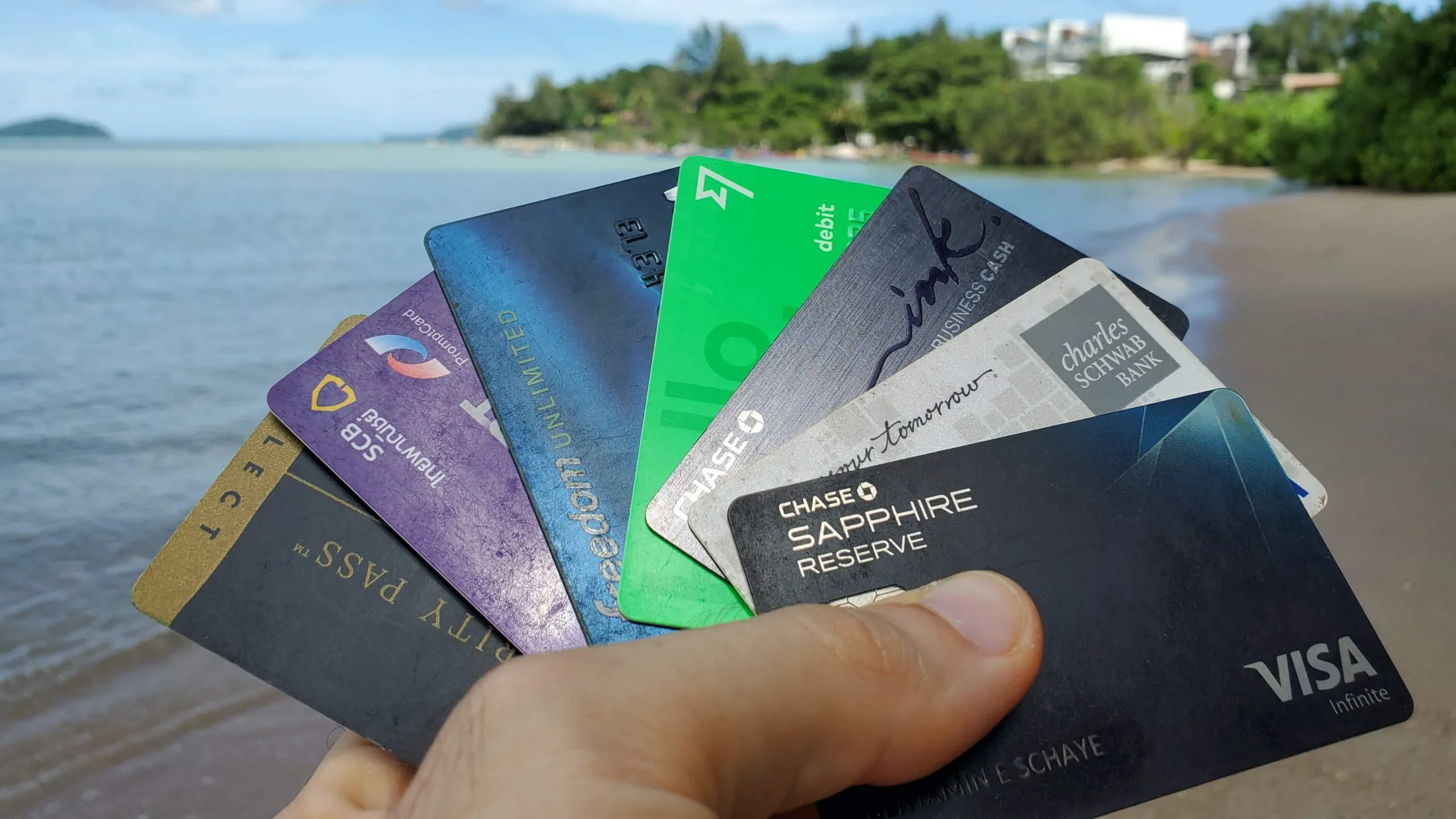
Choosing the right currency is only one part of managing money abroad. Your payment method can also affect how much you spend.
Cash
Cash is useful for smaller purchases and businesses that do not accept cards.
Keep a reasonable amount of local currency for everyday expenses, but avoid carrying more cash than you need.
Bank cards
International debit and credit cards can be convenient for hotels, larger restaurants, supermarkets and other businesses that accept them.
However, check for:
Foreign transaction fees.
ATM withdrawal charges.
Exchange rate markups.
Dynamic currency conversion fees.
Daily withdrawal and spending limits.
Travel cards
Travel cards can offer another way to manage payments abroad, depending on the provider, supported currencies and destination.
Some allow you to hold or exchange multiple currencies, while others convert transactions automatically. Fees and acceptance vary.
For a more detailed comparison, read our related guide: [Best Travel Cards for Africa 2026]. This article can help you compare travel card options before deciding how to pay for your trip.
For many international travellers, a combination of local currency, a suitable travel or bank card and a modest emergency cash reserve offers greater flexibility than relying on one payment method.
Travel Tips: Always Ask for the Local Price
One of the simplest ways to avoid unnecessary travel expenses is to ask for the price in local currency before agreeing to pay.
This small habit can help you understand what you are actually being charged.
1. Ask for the local currency price first
When a hotel, tour operator, driver or shop quotes a price in US dollars, ask whether the same service is priced in local currency.
Useful questions include:
How much is this in local currency?
What exchange rate are you using?
Is there an additional charge for paying in dollars?
Can I pay by card in local currency?
Compare the answers before making your decision.
2. Check the exchange rate
You do not need to be an expert in foreign exchange to compare prices.
Check a reliable currency converter for an indicative rate, then remember that the rate offered by your bank or exchange provider may differ.
Consider the full cost, including any transaction fees.
3. Confirm transport prices before travelling
Transport costs can be an important part of your travel budget, especially when you have several meetings, airport transfers or sightseeing trips planned.
Before beginning a journey, confirm:
The total fare.
The currency in which the fare is quoted.
Whether waiting time, tolls or parking are included.
Whether additional charges may apply.
For executive travel, arranging transportation in advance can make costs easier to plan and document.
Alpha Corporate Chauffeur Services helps business travellers arrange ground transportation in African destinations, with quotations that can be confirmed before the journey.
4. Exchange money through reputable providers
Use authorised banks or exchange bureaus and compare their rates and fees.
Avoid exchanging money with unverified street dealers. Count your money before leaving the counter and keep your receipt.
5. Be careful when paying by card
Some payment terminals offer to charge your card in your home currency instead of the local currency.
This is known as dynamic currency conversion.
The convenience can come with an additional markup. Paying in local currency is often worth considering, although your own bank may still apply foreign transaction fees.
Check the options displayed before confirming payment.
6. Carry suitable banknotes
If you plan to carry US dollars, check the destination’s requirements for acceptable banknotes.
Keep notes in good condition and consider carrying a range of denominations if foreign cash is useful for your itinerary.
Do not assume that a business will accept damaged notes or provide change in dollars.
7. Avoid carrying too much cash
Keep your cash secure and separate it from your bank cards.
Use electronic payments where suitable, and maintain a backup payment option in case your primary method is unavailable.
8. Check currency regulations before crossing borders
Countries may have rules concerning the declaration, import, export and exchange of cash.
If your itinerary includes several countries, check the requirements for each destination rather than assuming the rules are the same everywhere.
Which Currency Should You Use in Popular African Destinations?
Currency practices differ between countries and even between businesses in the same city. Here are some general examples to help you prepare.
Kenya
The Kenyan shilling is the official currency and is the practical choice for most everyday spending.
US dollars may be accepted by some hotels, safari operators and tourism businesses, but ordinary purchases are generally easier to manage in shillings.
International cards are useful at many established businesses, although acceptance varies.
Tanzania
The Tanzanian shilling is useful for routine purchases, local meals and many everyday services.
Some tourism businesses quote packages in US dollars. Confirm the accepted payment currency with your hotel, safari operator or tour provider before arrival.
Uganda
The Ugandan shilling is the local currency for everyday spending.
US dollars may be useful for certain tourism services, but you should check acceptance and exchange requirements in advance.
Rwanda
The Rwandan franc is the local currency.
Some hotels and tourism businesses accept US dollars, but local currency remains useful for routine purchases and services outside larger establishments.
South Africa
The South African rand is the currency to use for most everyday transactions.
International bank cards are convenient at many established businesses, but you should not assume that shops and service providers will accept US dollars directly.
Egypt
The Egyptian pound is used for most everyday purchases.
Some tourism providers may quote certain services in foreign currency. Confirm the currency, conversion rate and payment terms before agreeing to a price.
The general lesson is straightforward: check the payment practices of your particular destination, and carry the currency you will actually need.
Money Mistakes to Avoid When Travelling Around Africa
Before leaving home, review these common mistakes.
Assuming US dollars are accepted everywhere.
Paying in foreign currency without checking the local price.
Accepting an unfamiliar exchange rate without comparing it.
Ignoring ATM withdrawal fees and card transaction charges.
Exchanging more money than you expect to use.
Relying entirely on cash or a single bank card.
Forgetting to check banknote requirements.
Leaving a country with more local currency than you can reasonably spend or exchange.
Failing to confirm the currency for accommodation, transport and tour bookings.
Forgetting to include exchange costs in your travel budget.
Avoiding these mistakes can make it easier to manage your money and reduce unexpected expenses.
How Business Travellers Can Manage Currency and Transport Expenses
For business travellers, managing money is not only about buying meals and souvenirs. It can also involve keeping accurate expense records, arranging transportation and staying within an approved travel budget.
Here are some practical steps.
Request clear quotations
When booking airport transfers, chauffeur services or other ground transportation, confirm the currency and total cost before the journey.
Check whether waiting time, tolls, parking or additional stops are included.
Keep expense records
Record transactions in the currency charged and retain receipts where possible. This makes it easier to reconcile expenses when you return home.
Check card fees before departure
Ask your bank about foreign transaction fees, cash withdrawal charges and any restrictions on using your card abroad.
Plan transportation in advance
Prearranged transportation can help you budget for airport pickups, business meetings and other scheduled journeys.
Alpha Corporate Chauffeur Services provides corporate ground transportation solutions for international travellers visiting African destinations. Confirming the quotation and payment terms in advance can help you plan your transport expenses with greater confidence.
Frequently Asked Questions
1. Should I carry US dollars or local currency when travelling around Africa?
Carry local currency for most everyday purchases and consider keeping some US dollars if they are useful for your destination or bookings. A suitable bank card provides another payment option. The best combination depends on your itinerary and the payment methods available.
2. Can I use US dollars in every African country?
No. Some businesses in certain destinations accept US dollars, particularly in the tourism sector, but acceptance is not universal. Local currency is generally the practical choice for everyday spending.
3. Is it cheaper to pay in US dollars or local currency in Africa?
It depends on the exchange rate, transaction fees and the price offered by the business. Paying in local currency can help you avoid an unfavourable seller conversion rate, but compare the total cost before deciding.
4. Why do some businesses charge tourists in US dollars?
Some hotels, tour operators and safari businesses use dollars when quoting international travel packages. Their pricing may reflect the type of service, booking arrangements or business practices. Always confirm the currency and what is included in the price.
5. Can I spend more by paying in US dollars?
Yes, it is possible. A business may apply an unfavourable exchange rate or round up the converted price. Ask for the local currency price and compare the total cost before paying.
6. Should I exchange money before travelling to Africa?
You may find it helpful to obtain a small amount of local currency before departure if it is readily available at a reasonable rate. Otherwise, check your options for exchanging money or withdrawing cash after arrival.
7. Where is the best place to exchange money in Africa?
Authorised banks and licensed exchange bureaus are common options. Compare their exchange rates, commissions and other fees. The best option will depend on the country and the amount you want to exchange.
8. Is it better to exchange money at the airport?
Airport exchange counters are convenient, particularly when you first arrive, but their rates may be less favourable than alternatives elsewhere. Consider exchanging only what you need immediately and comparing other options later.
9. Should I carry cash or use a card when travelling around Africa?
A combination is often practical. Cash can help with smaller purchases, while cards can be useful at established businesses that accept international payments. Keep a backup option in case cash access or card payments are unavailable.
10. Can I withdraw local currency from ATMs in Africa?
Many destinations have ATMs that dispense local currency, particularly in major cities. Availability, withdrawal limits, card compatibility and fees vary. Check with your bank and avoid depending on a single ATM.
11. Should I pay in local currency when using my bank card?
When a payment terminal offers a choice, paying in local currency is often worth considering because the alternative may involve a dynamic currency conversion markup. Your bank may still charge a foreign transaction fee, so check its terms.
12. How much cash should I carry when visiting an African country?
There is no single amount that suits every traveller. Consider your planned expenses, destination, trip length, access to ATMs and availability of card payments. Carry enough for reasonable daily needs without keeping excessive cash on you.
13. Which currency should I carry when visiting Kenya?
The Kenyan shilling is the most practical currency for everyday spending. US dollars can be useful for certain tourism services and bookings, but acceptance varies. Check banknote requirements and exchange options before travelling.
14. Can I use US dollars in Tanzania, Uganda and Rwanda?
Some hotels, tour operators and other tourism businesses may accept dollars in these countries. However, acceptance varies, and the Tanzanian shilling, Ugandan shilling and Rwandan franc are useful for everyday purchases. Confirm the payment arrangements for your specific bookings.
15. Should I carry US dollars when going on an African safari?
US dollars may be useful for certain safari packages, depending on the country and operator. Ask your provider which currency is accepted, whether fees are included and whether local currency is needed for additional expenses.
16. Is it better to carry US dollars or euros when travelling around Africa?
Neither currency is automatically the best choice for every destination. Compare local exchange availability, fees and the rates offered for your home currency. Check which foreign currencies are accepted where you plan to travel.
17. How can I avoid being overcharged when paying in foreign currency?
Ask for the local price, check the exchange rate, confirm additional fees and compare the final amount before agreeing to pay. For transport and tours, request a clear quotation in writing.
18. Should I tip in US dollars or local currency in Africa?
Local currency is often practical for everyday tips because recipients can use it without exchanging it. However, tipping customs and accepted currencies vary by country and service, so check local expectations.
19. What should I do with leftover local currency when leaving an African country?
If practical, use a reasonable amount for final expenses or check whether an authorised provider will exchange it. Compare rates and fees, and review any restrictions on taking local currency across the border.
20. How can business travellers reduce currency and transport expenses in Africa?
Compare exchange rates and card fees, keep accurate expense records, confirm the currency of bookings and arrange transport in advance. Request transparent quotations and check what is included before confirming a service.
Final Thoughts: Carry the Right Currency, Not Just More Money
So, should you carry US dollars or local currency when travelling around Africa?
For most travellers, local currency is the practical choice for everyday spending. US dollars can be useful for certain bookings and tourism services, while a suitable bank card provides flexibility for payments and cash withdrawals.
The important thing is not simply which currency you carry. It is knowing when to use it.
Before paying for anything, remember to:
Ask for the price in local currency.
Compare exchange rates and transaction fees.
Confirm which payment methods are accepted.
Keep a suitable backup payment option.
Check the currency requirements for every country on your itinerary.
If you are preparing for an international trip, also read our guide to Best Travel Cards for Africa 2026 to learn more about card options and the factors to compare before travelling.
For business travellers visiting African cities, planning ground transportation and confirming costs in advance can also make budgeting easier. Alpha Corporate Chauffeur Services helps international visitors arrange chauffeur services and ground transportation for airport transfers, meetings and other travel requirements.
A little preparation before departure can help you spend more confidently, avoid unnecessary conversion costs and make better use of your travel budget.






Please follow and like us: